

How to Grow Sweet William (Dianthus Barbatus)
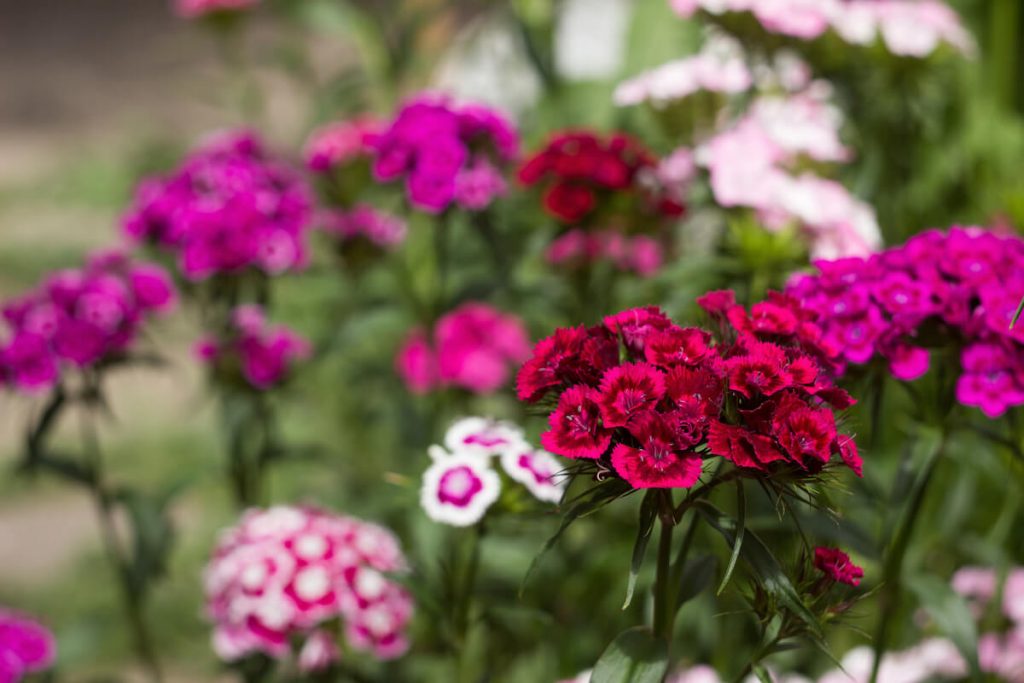
Sweet William is a dainty little charmer of a flower that’s a cousin to carnations and historically used in cottage style gardens. Also called “Dianthus” (from its scientific name Dianthus barbatus) it’s a colorful, small to medium-sized biennial or short-lived perennial flower that can range from 5″ to 36″ tall and thrives in zones 3 to 9, depending on variety.
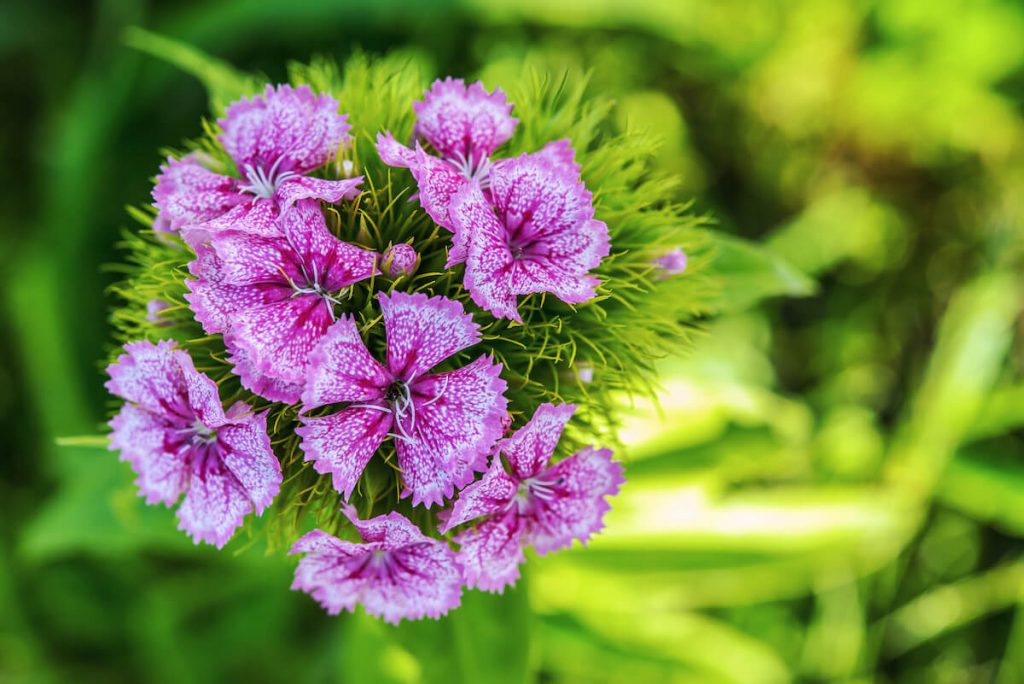
Sweet William plants are surprisingly sturdy and prolific, with their pink, purple, white and red blooms serving well in container gardens, flowerbed borders and cut flower arrangements. Named by the ancient Greeks and popular in the time of Shakespeare, they are one of the oldest cultivated plants and come in many different colors and varieties. When deadheaded regularly Sweet William will bloom from late spring through fall frost, providing a full season of color.
Sweet William growing conditions
Sweet William is a relatively forgiving plant, often thriving in a wide range of conditions. It comes in many sizes and colors, all preferring full sun (the more the merrier!) but some light afternoon shade is tolerated well in hotter climates. Too much shade though and they risk becoming tall and floppy, with sparser blooms.
Mildly drought tolerant, Sweet William does best in soil that’s loose, well-draining and kept evenly moist. They are heavy feeders and will flower best in rich soil that has a slightly alkaline ph (6.0-8.0). A balanced all-purpose fertilizer applied every 6-8 weeks during the growing season, regular weeding and a light layer of mulch is often appreciated as well.

Starting Sweet William from seed
Established Sweet William plants can often be found in nurseries and greenhouses in springtime but they also grow well from seed. Established plants will bloom the summer you buy them (many are often already blooming in the nursery!) while starting your own from seed will result in blooms the following spring.
Starting seeds indoors
Get a seed starting tray, seed starting mix, and Sweet William seeds of your choice. In the spring (no earlier than 6-8 weeks before last frost) fill the tray with the starter mix and plant the seeds up to 1/4″ deep. They can germinate on the surface, but it’s more difficult to keep them evenly moist (a layer of plastic wrap covering the tray can help). The most important thing is not to plant them too deep.
Check the tray daily and water as needed to keep it moist. The seeds will take approximately 7-14 days to germinate (see the seed packet for specifics). When you see sprouts breaking ground move the tray to full sun (remove any plastic or cover you may have used to hold in moisture) and continue to water regularly. When the seedlings reach 2-3″ high and all danger of frost has passed in your area they can be transplanted outside to their permanent location in a container garden or perennial bed.

Direct sowing outdoors
Similar to planting indoors, but instead wait until after all danger of frost has passed in the spring and plant the seeds directly into the ground outside. Choose a location that gets full sun and loosen the soil to a depth of 6-8″. Clear all weeds, grass and other plants, and amend soil with (add/mix in) compost or all purpose fertilizer if you think it needs a boost.
Plant the seeds by sprinkling over the loosened soil and then raking lightly before patting down gently with your hands. Alternately, you can plant seeds individually or in rows, up to 1/4″ deep. Water and keep evenly moist, watching for sprouts in about 7-14 days.
When they reach 2-3″ in height thin the seedlings to stand 6-18″ apart, depending on the size of your variety at maturity. Some will reach 12″ tall and 6″ wide, others as much as 36″ tall and 24″ wide. The seed packaging should have instructions regarding final spacing.
Reseeding/naturalization
Once you have Sweet William established in your yard it can and will reseed itself naturally if you let it (which means new plants will come up anywhere and everywhere near the existing ones, and sometimes surprisingly far away as well). To encourage reseeding simply leave some of the flowers on even after the petals fade, and seed heads will form. Keep areas where you would like the Sweet William to spread watered and free of weeds (be sure not to weed out any baby williams!), and the seeds will fall to the earth and germinate naturally. Thin and/or transplant as needed to prevent overcrowding.
If you have mixed Sweet William varieties within close proximity new seedlings may be unpredictable in size and color due to cross-pollination blending the different varieties.
It’s also worth noting that in some cases Sweet William is almost invasive when allowed to reseed naturally, and without limit can spread to unwanted areas and/or choke out other perennials and flowers. To prevent this simply remove spent flowers (deadhead) before they make mature seeds and remove any unwanted volunteers.
Uses and ideas for growing Sweet William
Pollinator garden
Sweet William makes a great addition to a pollinator-friendly landscape as it attracts and supports bees, butterflies and hummingbirds.
Flowerbed borders, edges and containers
The smaller stature and long bloom time (late spring through fall) makes Sweet William a good choice for anchoring season-long container gardens as well as perennial borders.
Cutting garden
Sweet William flowers smell wonderful and last upwards of 7-10 days in water (frequently as long as 2 weeks!) and since cutting the flowers only encourages more blooms you can’t go wrong using them in vases and other indoor arrangements.
Deer and rabbit resistant
Sweet William is naturally resistant to (and usually avoided by) both deer and rabbits.
Sweet William FAQ
Does Sweet William have a scent? Yes! Like many old-fashioned cottage flowers it releases a rich perfume that will add subtle fragrance to your whole garden. Sweet William smells sweet with a hint of cinnamon and clove notes.
Is Sweet William poisonous? It has some poison characteristics and care should be taken that it is not ingested. Sweet William (Dianthus barbatus) is rated as “low toxicity” to humans if eaten (nausea, diarrhea) and possibly minor skin irritation for some. It is slightly more toxic to dogs and cats than it is for humans.
Where did Sweet William originate? Sweet William is native to Southern Europe.
Why are my Sweet Williams not flowering? Most Sweet William varieties are either biennial or perennial. Biennial means they bloom their second year (the first year they just make leaves, then they die back over winter and come back the next spring and bloom). Perennial varieties of Sweet William often take two years to start blooming. Another possible cause of little to no blooms is too little sun/too much shade. Sweet William prefers at least 6+ hours of sun per day.
What colors does Sweet William come in? Sweet William is available in shades of pink, purple, white and red. Sometimes individual plants will bloom in more than one color. Cross-pollinating can also occur, resulting in interesting combinations and color blends.
What is the best way to propagate Sweet William? Sweet William grows easily from seed, to the extent it often reseeds itself and will appear almost as a perennial (plants coming up and blooming every year independently, albeit in slightly different locations as time goes on). They can also be propagated from cuttings.